
 There is a piece of folk wisdom that says we are known by the company we keep. Another aspect of that is that we tend to be influenced by the people we associate with. Some of these associations seem to come with little or no choice on our part. As children, we cannot control the family we are a part of, the other children in our neighborhood and/or school. As adults, we sometimes find ourselves in work environments we do not choose. While it might seem that who we associate with is something beyond our control, I suggest there is a difference between those people we spend time with in a controlled setting like school or work and the people we associate with in voluntary relationships.
History is filled with the accounts of people who overcame limitations stemming from circumstances of background and accomplished extraordinary things. Although the reasons for these people’s success varies, a common factor seems to be the introduction of possibility thinking into their life experience.
I have always been a person who is able to see the possibilities in my life and the lives of others. For this reason, I’ll admit this way of thinking comes  easily and naturally to me. I am always surprised when someone chooses to approach a decision in a different way. What this means is that if you talk with me about something you are considering, I am much more likely to ask ”Why not,” than “Why.”
As you think about the people you associate with, are there more people who ask you “why” or “why not.” I listen to the “why” people in my life to see if any of their objections raise valid reasons I should not consider doing something. I find in my life there are always more than enough “why” people, people who have never done what I am considering. In fact, I often ask myself what these people have done that gives them credibility in evaluating what I am considering doing.
I am looking for the “why not” people who will listen to an idea and encourage it. I seem to never have too many of these people in my life. They tend to be the people who are off pursuing their own dreams, while encouraging me and others to pursue ours.
 “Why” people tend to be critical of others. The function of criticism is to get you to change your behavior so I will feel better. Critical people-”why” people -seem to want to bring everyone around them down to their level so everyone can be as unhappy as they are. I don’t know about you, but that’s not how I want to live my life.
“Why not” people realize that not every dream becomes a reality. Because they are focused on achieving and the success of others, they are able to quickly move ahead to find a better, more realistic dream if the current one doesn’t accomplish all it was supposed to.
As we move forward, I urge you to find “why not” people to encourage you and your dreams. These people will lift you up–not drag you down. I would like for us to be “why not” people to one another. Dream big–why not!!
We have a podcast containing the As We Move Forward articles read by Jae Bloom.
 actually move us in the direction of really achieving the things in life that will bring satisfaction and happiness. It is very important through this process to constantly ask, ”Who am I listening to?” We all have a number of sources we go to for guidance, direction, information and advice. Not every one of these sources is equally valuable to us in helping achieve these goals.
 In a truly person centered environment, we learn to ask certain questions every time we listen to someone. We ask what this person really can teach us about a particular decision we are considering. The best advice comes from someone with actual knowledge and experience in a particular situation. I have opinions on many subjects. I have actual knowledge on a much smaller range of subjects. Obviously, I would be a better person to listen to in those areas I have actual knowledge.
 Who do you choose to listen to? Who are you compelled by circumstances to listen to? Who are the “they’s” in your life? How hard have you worked to understand these people and their point of view? What have you learned from this? I believe the answers to these questions goes a long way toward moving us forward. Not doing it can leave us angry, confused and stuck. Working through these questions helps us achieve our desired outcomes in person centered living.
 What would you try if you knew you absolutely could not fail? That is an important question. Many people never try anything for fear of failure. They convince themselves they could never accomplish a particular thing so they never try. The result can be a life of regret. It doesn’t have to be that way. When your dreaming brings you to the things that seem impossible, or at least out of reach, it is always possible to find a related activity you can do that falls into the “impossible to fail” category.
 effort and money to reach the dream. I have used this method several times. At several times in my life, I have thought about law school. I found a program that
 One of the strongest influences regarding how we function in various situations is point of view. So many factors contribute to point of view it would be impossible to list them all. Our backgrounds and interests are big factors. The experiences we have had and the ways we have responded to them have a lot to do with our current responses. Our relationships, past as well as present, can have a profound impact on our point of view.
 What do you do when your point of view is at odds with that of someone else? We all know people who argue and insist that theirs is the only acceptable point of view. We all know how frustrating it can be to be on the receiving end of that kind of one sided conversation.
 How many different points of view have you made an attempt to understand? How successful have you been so far? How much could you improve someone’s experience of the holidays by seeing things from their point of view?
  term for the difficulty of making a specific choice. FOMO–”Fear of Missing Out” means that making one specific choice rules out another choice. There are people who go from one thing to another believing that the newest thing on the horizon is better than the current one.
 Each has utilized my primary gifts, and each has brought me satisfaction in achieving specific goals and objectives.
 Write down the specifics you come up with. Tell someone you trust what specifics you come up with. Both of these will get you on the road to accomplishing your dreams. Remember, be as specific as you can. This life is a fascinating journey if you know where you are planning to go.
 As we strive to grow in establishing and maintaining healthy relationships, we look for those elements that appear to be a part of every good relationship and seem to be lacking in those that are not successful. One thing good relationships tend to be established on is respect.
 Respect can keep a relationship going in the midst of obstacles. We can have respect for someone we disagree with as long as the disagreement does not violate our core values. Respect can also allow people of widely different abilities and experience levels to work together. I am not a detail oriented person. I respect and admire the abilities of detail oriented people, even beyond my limited understanding of how that ability works. I enjoy working on projects with detail oriented people as long as my lack of detail orientation does not limit the value someone sees in my contribution to the project and to the relationship.
 Think about several of your important relationships. Do you respect the other person? Do you believe they respect you? Are you part of any relationships where you think there is a lack of respect? How does being in one of those relationships make you feel? Have you been part of any relationships where respect has been violated or withdrawn? What has that felt like?
 The way we respond to stress and anxiety can give us a lot of information about how we function in relation to other people. In these situations, where you seem to be out of control and have no solution in sight, do you feel helpless or hopeless? That might sound like a very simple distinction, but it actually says a lot about the coping mechanisms we have available when we feel overwhelmed.
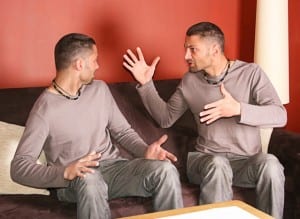 The helpless person can be said to operate out of a mindset of outward blame, while the hopeless person is seen as using inward blame. A helpless person can be depicted as flailing and yelling in all directions, aggressively attacking whoever or whatever out there is causing the misery they are experiencing. While not alone, the helpless person can often be feeling very lonely.
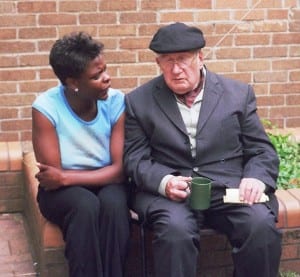 I believe every insight we gain in how we interact with others can be helpful in our personal growth. Helplessness and hopelessness are neither bad or good. They just tell us a little bit about the amazing person we are. Happy discovery.
 Recently, I was in a computer store at a mall. I was there to check on the condition of the battery in a cell phone. I was met at the entrance by someone from the store, asking me if I had an appointment. When I said I did, he verified the electronic check in process and told me someone would be with me momentarily. I was led from place to place by people who had a great deal of technical competence and who kept asking for data which they entered into their electronic device. After a while, and after repeatedly looking at their electronic device, the person told me what was going to happen, how long it would take to do what they were prepared to do, and what it would cost me to do it. I agreed to the terms they outlined, and they walked away to do whatever they do when they go behind the doors to the work area. At the specified time, I returned, and we completed the transaction, after which I left.
 Think about what happens in most of the communication you are involved with. How much do you share with those with whom you are communicating about what is going on in your life or theirs? Maybe you are someone who does not have much use for “small talk,” casual conversation without a particular agenda. Perhaps you simply don’t know or have forgotten how to do this.
 In real communication, we take our feelings, thoughts and intentions public and risk sharing them with another person, who filters our words through their own feelings, thoughts and intentions. It takes time and work to have that kind of communication with someone else. A simple exercise is to ask someone something and keep asking them until you have a sense you really understand what they have told you. Then ask them if you have heard what they were trying to say.
 Do you find it difficult making decisions? Many people get to the point of deciding to take all the valuable information they have been accumulating and find themselves frozen at the point of taking the first step in any direction. Frustration over decision making can occur at many levels in life. How often do you approach the choice of where to go to have a meal only to be frustrated at picking a restaurant. Some people have this difficulty in settling on a vacation destination.
 “Decision making is the specific executive task” – Peter Drucker. That does not mean that only executives make decisions. It does set decision making apart as an act of creativity. A decision marks a turning point. Something changes as the direct result of a decision. Another way of saying this is there are consequences to every decision. One thing is selected. Another is not.
 “Change is the end result of all true learning. Change involves three things: First, a dissatisfaction with self — a felt void or need; second, a decision to change to fill the void or need; and third, a conscious dedication to the process of growth and change — the willful act of making the change, doing something” – Leo Buscaglia. So, consider decision making as one of your basic tools. Start small with simple decisions, easy to carry through on. Like any tool, practice improves competence. Make decisions every time the opportunity presents itself.
 “You are now at a crossroads. This is your opportunity to make the most important decision you will ever make. Forget your past. Who are you now? Who have you decided you really are now? Don’t think about who you have been. Who are you now? Who have you decided to become? Make this decision consciously. Make it carefully. Make it powerfully” – Tony Robbins. Make decisions, and enjoy the process!!
 One of the most difficult things to achieve in life is balance. In terms of overall satisfaction with life, we might be inclined to think things like money, possessions or prestige in employment put us high in the satisfaction ranking. Numerous studies over the years show that any or all of these things do not make people rank their happiness or satisfaction with life higher than other factors. What shows up time after time is how having consistent, uniform satisfaction over the various phases of life leads to happiness and fulfillment.
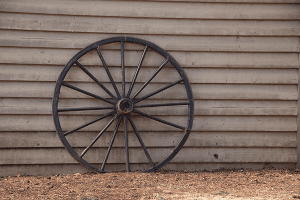 Most versions of this model start by drawing a wheel with a number of spokes. Each spoke is labeled with one element of life. Although the elements vary with different versions of the wheel, the list includes such things as family, career, health, financial, education, recreation, charitable acts, adventure, travel, romance, relationships, and spiritual. Your wheel may not include everyone of these spokes, and your life may contain a few not here, but this is a pretty comprehensive list of the various aspects of life.
 Obviously, if you discover low satisfaction in a number of the spokes, you will want to pick out one aspect of life to focus on at a time. This exercise may tell you exactly what you already knew, or it may show you some surprising insights into areas of life where you really need to work to increase satisfaction to achieve balance. The wheel can be used on a regular basis to check on progress and to help determine when you are ready to focus on increasing satisfaction, happiness and balance in another area of life.